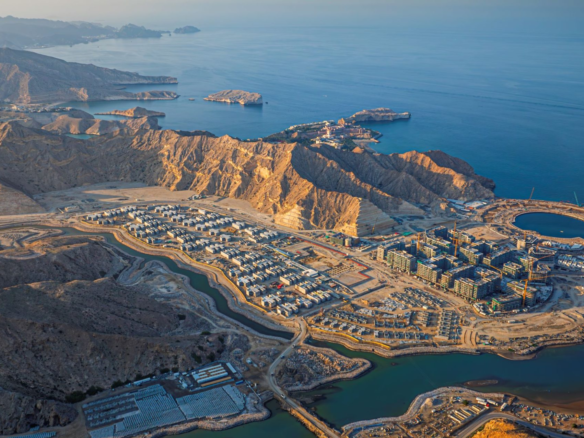

Muscat’s 2026 property cycle is attracting global capital, but smart investors are looking past headline growth. The edge is in choosing freehold markets with legal clarity, financing access, and reliable resale demand.
For international buyers, returns in Muscat depend on ownership structure, submarket choice, financing access, and resale liquidity. Two communities can sit in the same market and still produce very different income, risk, and exit outcomes.
Why investors are watching Muscat in 2026
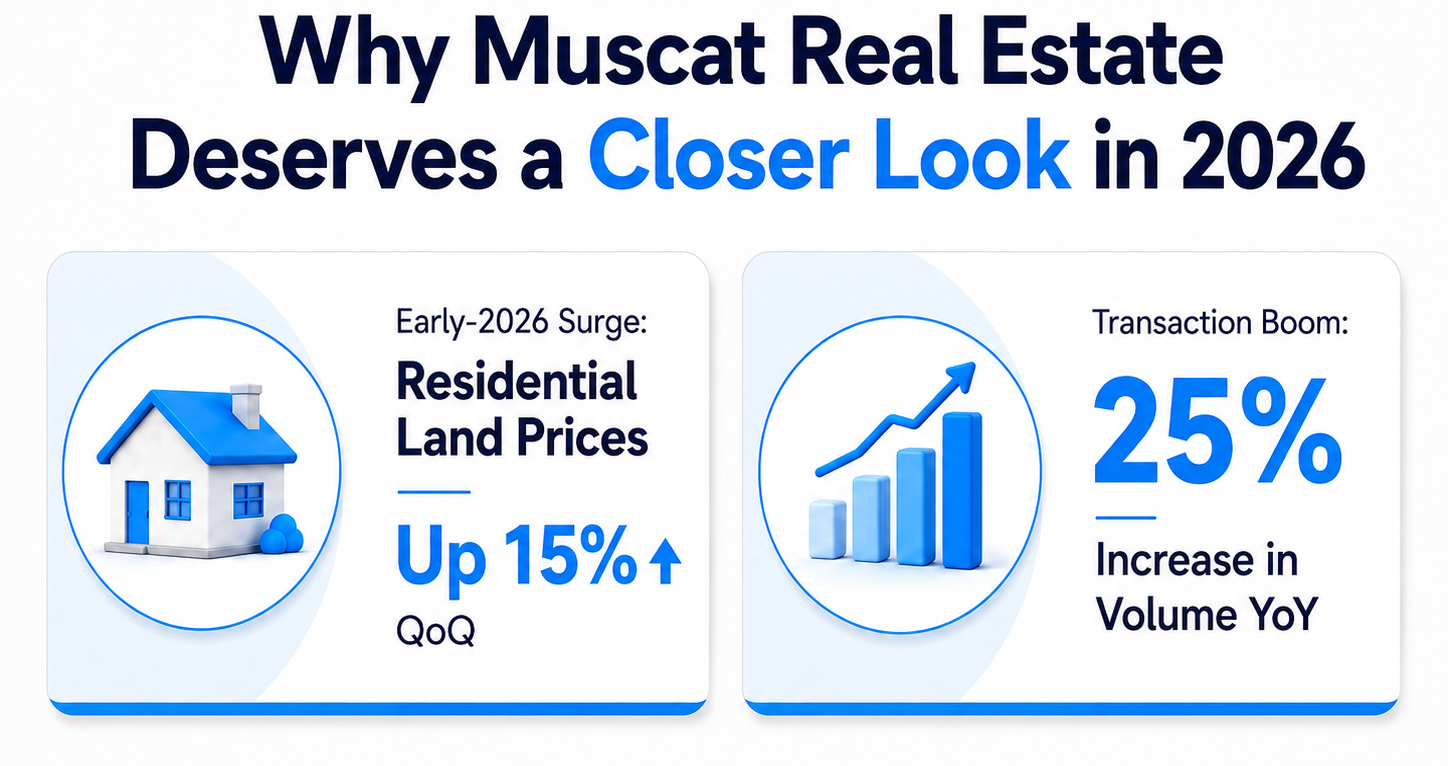
Muscat is leading this phase of the market. Early 2026 data, highlighted in a Bank Muscat market note, showed the Muscat governorate recording a 43.6% year-on-year increase in residential land prices. Another market report from the Oman Observer placed Muscat’s price index growth at 41.3%. At the national level, the overall real estate price index rose by 15.9%, while residential property prices increased by 17.6% in Q1 2026.
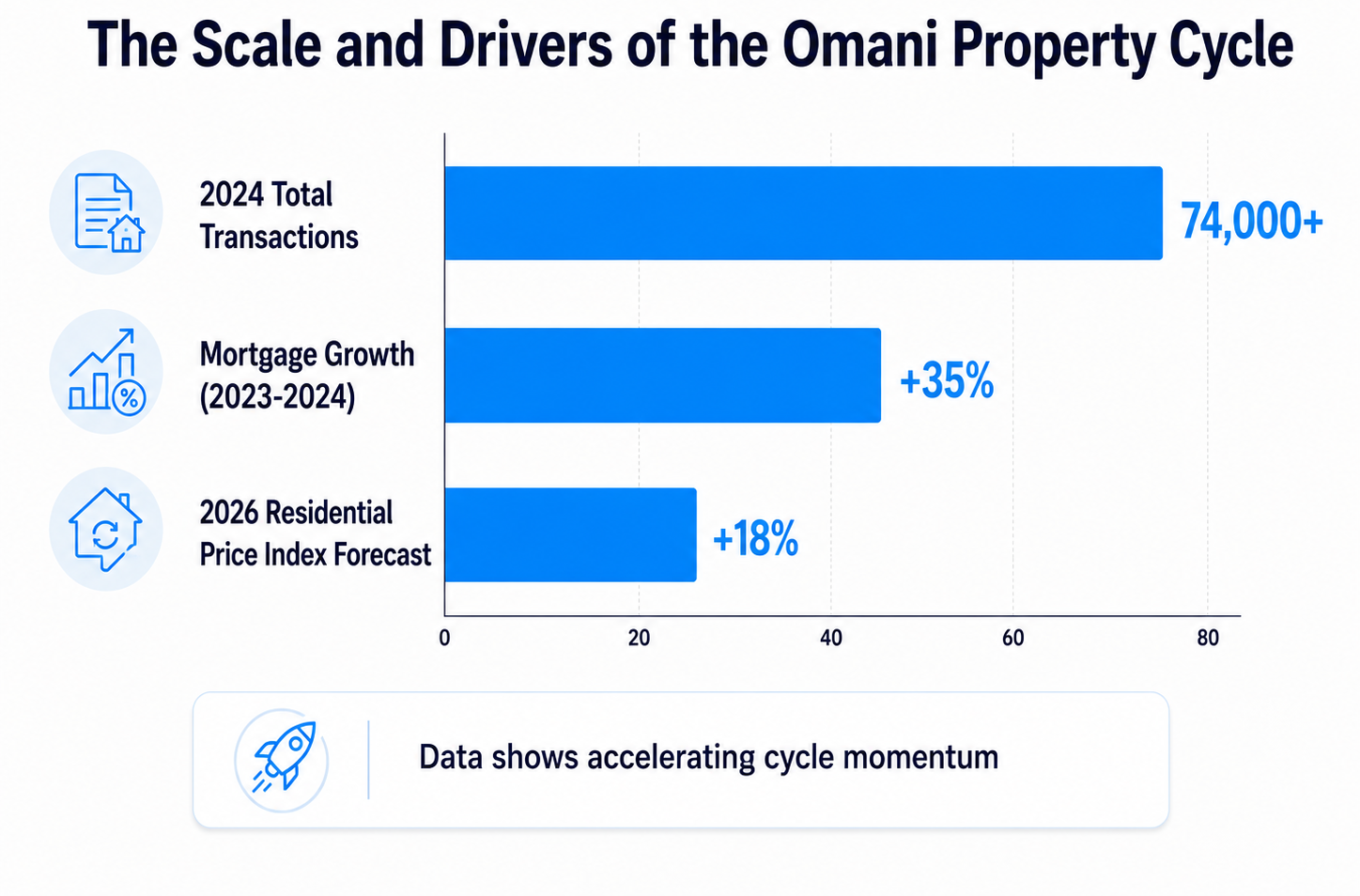
Liquidity is improving as well. As reported by the Oman Observer, Oman recorded OMR 3.379 billion in total real estate transactions in 2024, up from OMR 2.607 billion in 2023. By year-end, 233,345 property deeds had been issued, while mortgage activity rose by 46.4%, indicating that financing availability is supporting transaction flow.
“Investor perspective: The central question is not whether Muscat has become more expensive. It is which freehold submarket best fits your ownership profile, income target, and exit route.”
What international investors need to know about ownership
For international buyers, legal structure is the first filter. In Muscat, full freehold ownership for non-Omani buyers is generally limited to government-licensed Integrated Tourism Complexes, under Royal Decree 12/2006. Key examples include Al Mouj Muscat, Muscat Bay, Jebel Sifah and The Sustainable City. For most overseas investors, this is the clearest path to direct ownership, financing access, and future resale. Official decree text Ministry copy of the ITC ownership law
In practice, opportunities fall into three legal tiers:
- ITC freehold, the clearest route for ownership certainty, financing compatibility, and resale liquidity.
- Usufruct or special-use structures, which require careful legal review.
- SEZ and Free Zone opportunities, widened by Royal Decree 38/2025, effective 14 April 2025, and mainly relevant to commercial or mixed-use strategies.
The practical rule is simple. Screen by tenure first, community second, price third. A strong-looking asset in the wrong legal structure can be harder to finance, transfer, and sell.
As broader market coverage from Arabian Daily has also noted, foreign buyers should confirm legal eligibility early rather than assume that every coastal or master-planned asset is open to direct ownership.
If you want a practical legal overview alongside listings, the most useful starting point is this guide to buying and investing in freehold property in Oman.
“Rule of thumb: If a listing does not clearly explain foreign ownership, treat that as a risk until legal counsel confirms otherwise.”
Comparing Muscat’s main freehold communities
For international buyers, the shortlist is simple: licensed ITC freehold communities. In Muscat, that means Al Mouj Muscat, Muscat Bay, Jebel Sifah, and AIDA.
Al Mouj Muscat usually leads for rental depth, market recognition, and resale visibility. Muscat Bay and Jebel Sifah are more lifestyle-led coastal holdings, often better suited to buyers who value privacy, setting, and a longer hold period. AIDA is the forward-looking option, best for buyers comfortable with a longer-term master-planned growth story.
For a full overview, check out Aqaro’s community profiles and compare properties.
“Investor takeaway: Freehold clarity first. Community fit second.”
What types of property make the most sense
Strong acquisitions in Muscat start with disciplined selection. Off-plan suits buyers seeking staged payments and early exposure, but it adds development and handover risk. Ready stock offers immediate inspection, leasing visibility, and cleaner underwriting.
Residential is usually easier to finance, lease, and compare across submarkets. Commercial can work in the right mixed-use setting, but it demands closer judgment on tenant quality, fit-out obligations, and hold period.
The key divide remains ITC versus non-ITC. ITC stock usually offers the clearest foreign ownership route and a broader buyer pool on exit. A brokerage like Aqaro is useful here because it lists both residential and commercial stock and filters by ownership type, which helps buyers separate legal structure from marketing language.
Property checklist for international buyers
- Confirm from the outset that the asset sits within an eligible ITC freehold structure.
- Shape a clear acquisition brief around capital growth, income, lifestyle use, or resale liquidity.
- Shortlist communities with proven foreign buyer demand, stronger tenant depth, and cleaner exit visibility.
- Review rental evidence, service charges, management quality, and title documentation before terms are agreed.
- Verify seller authority, NOC status, financing compatibility, and transfer mechanics through the proper channels.
- Define the likely exit buyer and the reason that buyer would pay a premium.
How the purchase process works
A premium acquisition in Muscat should feel controlled, and documentation-led.
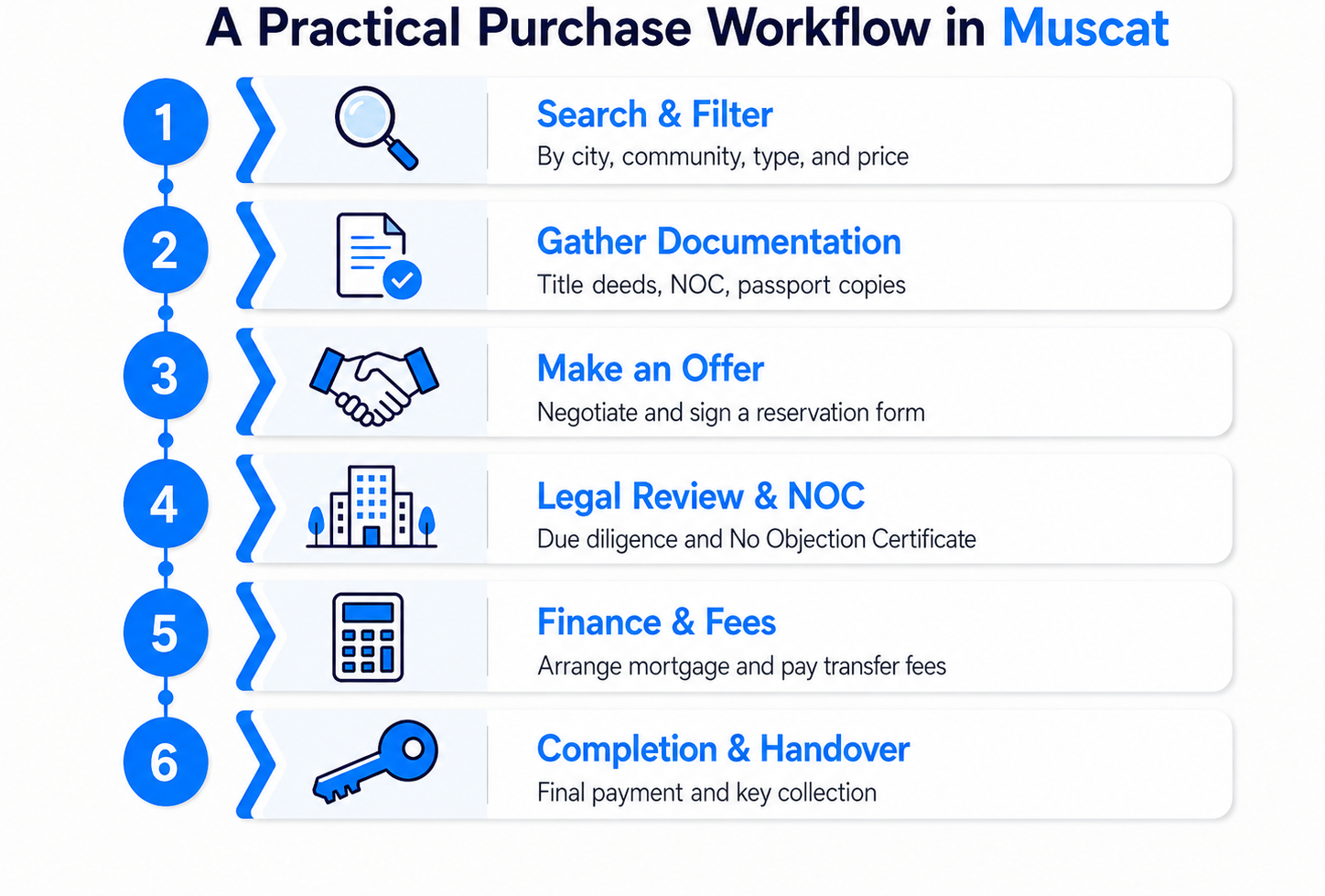 Cash transactions usually move faster. Financed purchases take longer because valuation, approval, and disbursement must align.
“Helpful reminder: Confirm ownership status and seller documentation before funds are transferred.“
Key details to keep in mind
A few ownership points are worth clarifying before you proceed.
- Not every Muscat listing is available to foreign buyers. Direct freehold access is usually limited to licensed ITCs.
- ITC status improves ownership clarity, not investment quality by itself. Value still depends on pricing, community strength, and exit depth.
- Property ownership does not automatically confer residency. Any residence pathway is separate, conditional, and approval-based.
Finding the right property in Muscat
At Aqaro, we help buyers explore freehold property in Muscat with clarity and a long-term view. Contact us for guidance.